
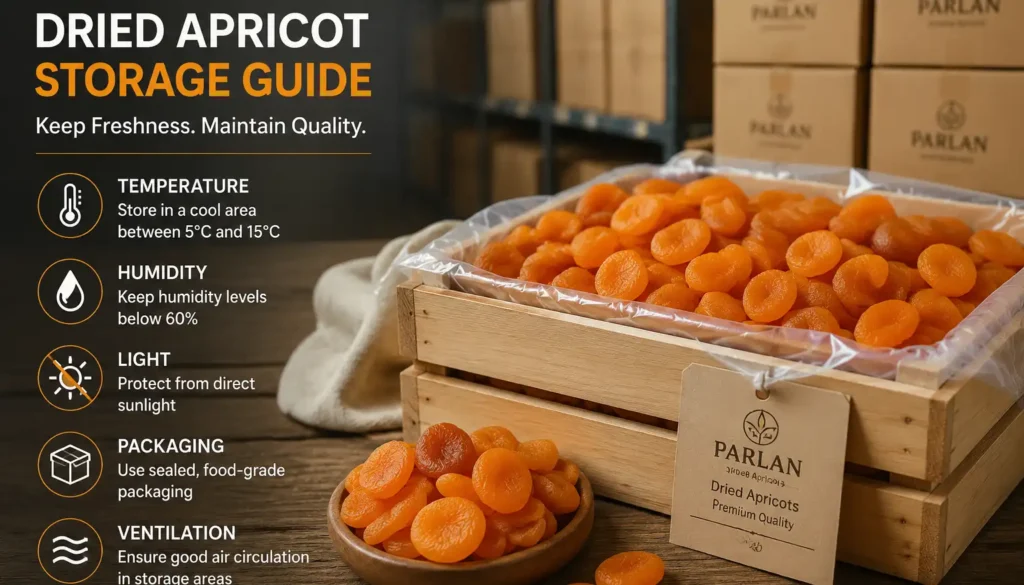
Dried apricots are one of the most popular dried fruits in international markets due to their natural sweetness, attractive color, nutritional value, and long shelf life. However, proper storage conditions are essential to maintain their quality, texture, flavor, and appearance from production facilities to the final consumer.
For exporters, importers, wholesalers, and food companies, understanding how to store dried apricots correctly helps reduce product waste and ensures customer satisfaction in global markets.
Why Proper Storage of Dried Apricots Is Important
Although dried apricots have a naturally long shelf life, improper storage can negatively affect their quality. Exposure to moisture, heat, oxygen, and direct sunlight may cause changes in color, texture, taste, and overall appearance.
High-quality dried apricots should maintain their soft texture, natural aroma, and bright color throughout their storage period. Proper storage is especially important for export products because shipments may take several weeks before reaching international buyers.
Ideal Temperature for Storing Dried Apricots
Temperature is one of the most important factors in preserving dried apricots. The recommended storage temperature is between 5°C and 15°C in a cool and dry environment.
High temperatures can accelerate quality deterioration and may affect the natural color and flavor of dried apricots. Warehouses used for storing export-quality dried fruits should have proper ventilation and stable temperature conditions.
Control Humidity to Protect Dried Apricot Quality
Humidity control plays a critical role in maintaining dried apricot freshness. Excess moisture can make dried apricots sticky, increase the risk of mold growth, and reduce shelf life.
For commercial storage, dried apricots should be kept in warehouses with controlled humidity levels. Proper packaging materials, such as food-grade bags and sealed cartons, also help protect the product against moisture absorption.
Use Proper Packaging for Long-Term Dried Apricot Storage
Packaging is a key factor in protecting dried apricots during storage and transportation. High-quality packaging prevents contamination, moisture penetration, and loss of product freshness.
For international shipments, exporters usually use food-grade packaging solutions designed to maintain product quality during long-distance transportation. Vacuum packaging and sealed packaging methods can also help extend shelf life.
Protect Dried Apricots From Direct Sunlight and Oxygen
Direct sunlight and excessive oxygen exposure can negatively affect dried apricots. Continuous exposure may cause color fading and reduce the natural quality of the product.
Storage areas should be dark, clean, and protected from direct sunlight. Using appropriate packaging helps minimize oxygen exposure and keeps dried apricots fresh for a longer period.
How Long Can Properly Stored Dried Apricots Last?
When dried apricots are produced with high-quality standards and stored under suitable conditions, they can maintain their quality for 12 to 24 months.
Factors such as moisture content, packaging type, storage temperature, and production quality directly influence shelf life. Exporters should always follow international food safety standards to deliver consistent quality to global customers.